

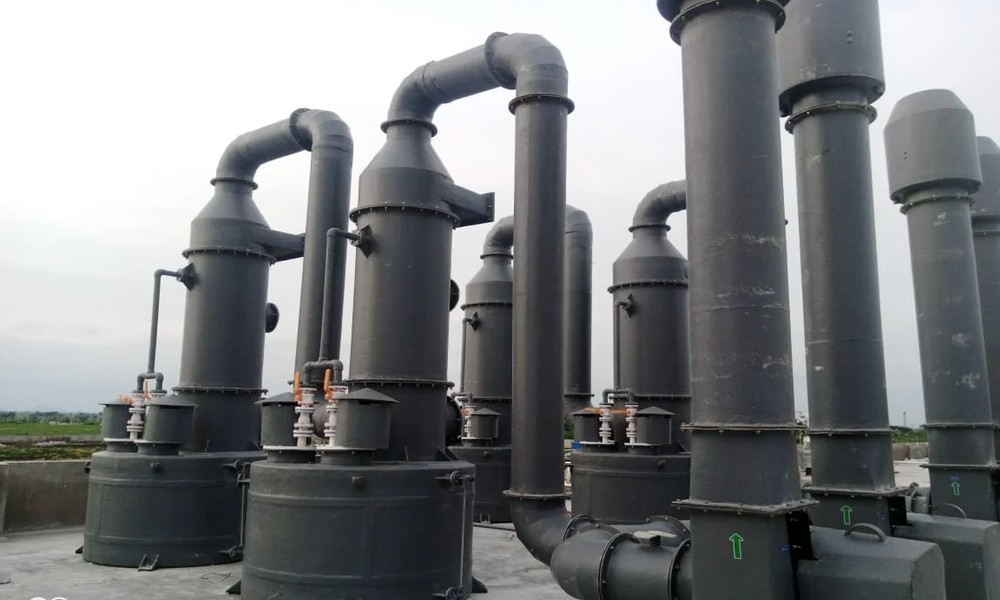
Heavy industrial facilities operate under some of the strictest environmental and workplace safety regulations in the country. From chemical processing plants to power generation facilities, the pressure to meet federal and state compliance standards while keeping operations running is a daily reality for plant managers and process engineers. One of the most reliable tools for meeting those demands is proper gas treatment equipment. Industrial scrubber systems have become a cornerstone of compliance strategy across sectors where toxic, corrosive, or particulate-laden gas streams are part of normal operations.
Understanding how scrubber technology ties into OSHA and EPA requirements is not just useful for compliance officers. It is essential knowledge for engineers, operations leaders, and procurement teams who are responsible for specifying and maintaining equipment that keeps workers safe and facilities out of regulatory trouble.
The Regulatory Landscape: What OSHA and EPA Actually Require
Before looking at how scrubbers address compliance, it helps to understand what the regulations are actually asking of industrial operators.
The Environmental Protection Agency governs air emissions primarily through the Clean Air Act and its associated standards. The National Emission Standards for Hazardous Air Pollutants, commonly known as NESHAP, set limits on specific toxic and hazardous air pollutants. New Source Performance Standards, or NSPS, establish emission limits for new, modified, or reconstructed industrial sources across a wide range of industries.
OSHA, meanwhile, focuses on worker exposure to airborne hazards through its Permissible Exposure Limits, or PELs. These limits define the maximum concentration of specific substances that workers can be exposed to over a standard workday without protective intervention. Industries dealing with hydrogen sulfide, chlorine, ammonia, sulfur dioxide, hydrochloric acid vapors, and similar compounds face strict PEL thresholds that require active emission control, not just personal protective equipment.
When facilities produce process exhaust streams, vent gases, or fugitive emissions containing these substances, scrubber systems are often the most direct and effective means of reducing concentrations to acceptable levels.
How Scrubber Systems Address Air Emission Standards
Wet scrubbers work by bringing contaminated gas streams into direct contact with a scrubbing liquid, typically water or a chemically reactive solution. The contaminants in the gas are absorbed, neutralized, or captured before the cleaned gas exits through the stack. This process is directly applicable to a range of regulated pollutants.
For acid gas control, alkaline scrubbing solutions neutralize compounds like hydrogen chloride, sulfur dioxide, and nitrogen oxides before they are released to atmosphere. For facilities subject to NSPS or NESHAP standards targeting these specific compounds, a properly engineered scrubber system can reduce outlet concentrations to levels well within regulatory limits.
Particulate matter is another area where scrubbers contribute. In certain industrial processes, wet scrubbers capture fine particulate alongside gas-phase contaminants, making them a dual-purpose solution for facilities facing both particulate and chemical emission limits.
One of the practical advantages of wet scrubbers compared to other air pollution control technologies is their ability to handle high-temperature, high-humidity, and corrosive gas streams that might damage dry filtration systems or electrostatic precipitators. This makes them particularly valuable in chemical processing, pharmaceutical manufacturing, metal refining, and pulp and paper operations where gas stream conditions are variable or aggressive.
Worker Safety and OSHA Compliance
Beyond environmental permits, scrubber systems play a meaningful role in protecting workers from exposure to hazardous substances.
OSHA’s Process Safety Management standard, 29 CFR 1910.119, requires facilities handling highly hazardous chemicals above certain threshold quantities to implement comprehensive safety programs. Part of that program involves controlling the release of toxic gases into the work environment. Scrubbers installed on process vents, reactor outlets, and storage vessel pressure relief systems help ensure that routine and emergency releases do not create hazardous atmospheric conditions in or around the facility.
In many heavy industrial environments, process equipment operates continuously. Venting during normal operations, including degassing, drum unloading, and tank breathing, can create chronic low-level exposure risks if not properly controlled. A well-designed scrubber system on these vent streams keeps ambient concentrations below OSHA PELs, supporting both compliance documentation and the broader goal of a safe working environment.
Emergency scrubbing is another important consideration. Some facilities design scrubber systems specifically to handle the gas loads generated during upset conditions, such as pressure relief valve discharge or emergency tank venting. These systems are sized and engineered to absorb worst-case release volumes, providing a critical safeguard for both workers and the surrounding community.
Matching Scrubber Design to Regulatory Requirements
Not all scrubber systems are the same, and selecting the right design for a specific compliance application requires careful engineering judgment.
Packed tower scrubbers are a common choice for continuous gas absorption applications. They offer high removal efficiency for soluble gases and can be designed with the appropriate packing material and contact time to meet specific outlet concentration targets. This makes them suitable for facilities that need to demonstrate consistent compliance with permit limits through continuous emission monitoring.
Venturi scrubbers handle higher particulate loads and can process sticky or viscous gas streams that would foul a packed bed. They are often used in applications where particulate and gas-phase contaminants must be captured simultaneously.
The selection of scrubbing liquid matters as well. Caustic soda solutions are commonly used for acid gas absorption. Acidic scrubbing solutions are appropriate for alkaline contaminants like ammonia. In some applications, oxidizing solutions are used to convert contaminants to less harmful or more easily absorbed forms. The chemistry of the scrubbing solution must be matched to the specific contaminants being targeted, and the system must be designed to maintain effective chemical concentrations under varying process loads.
For facilities subject to permit conditions that include continuous emission monitoring, the scrubber system design should also account for the placement and accessibility of sampling ports, flow measurement points, and monitoring connections. This is not always a primary concern during initial specification, but it becomes important during regulatory audits and permit renewals.
Documentation, Recordkeeping, and Audits
Compliance is not just about equipment performance. Regulators expect facilities to demonstrate that their control equipment is operating correctly and that records exist to prove it. This is an area where scrubber system design and maintenance practices intersect with compliance management.
OSHA and EPA inspectors can and do review maintenance logs, emission monitoring records, and equipment calibration data. Facilities that can produce comprehensive records showing consistent scrubber performance, regular inspection results, chemical usage data, and corrective action histories are in a much stronger position during audits than those that cannot.
Designing scrubber systems with proper instrumentation, including pressure drop indicators, liquid flow meters, and temperature monitoring, supports the kind of ongoing data collection that regulators expect. A system that lacks adequate instrumentation makes it difficult to demonstrate that it was operating within design parameters at any given point in time.
Proactive Compliance as an Operational Strategy
Regulatory compliance in heavy industrial environments is rarely a static condition. Permit limits can tighten as regulations evolve. Process changes that increase throughput or modify chemical usage can change the emission profile of a facility. Equipment aging can reduce scrubber efficiency over time if maintenance is deferred.
A proactive approach to compliance treats scrubber systems as critical process equipment rather than bolt-on additions. This means specifying systems that provide performance margin above minimum regulatory requirements, maintaining equipment on a defined schedule, and revisiting system performance when process conditions change.
It also means understanding where scrubbers fit within the broader air quality management program at a facility. Scrubbers work best as part of an integrated approach that includes process controls, monitoring systems, and emergency response planning. When those elements are aligned, facilities are better positioned to meet current requirements and adapt to future regulatory changes without major disruption to operations.
Final Thoughts
OSHA and EPA compliance in heavy industrial environments is a complex, ongoing responsibility. For facilities that handle hazardous gases, acid vapors, toxic fumes, or particulate-laden exhaust streams, scrubber systems are among the most reliable and adaptable tools available for meeting both environmental and worker safety requirements.
Proper system selection, thoughtful engineering, and consistent maintenance are what separate facilities that simply install a scrubber from those that actually achieve and sustain compliance. Getting those details right is ultimately the difference between a system that satisfies regulators on paper and one that genuinely protects your process, your people, and your operating permit.
If your facility is evaluating scrubber system requirements for current or anticipated compliance needs, working with an experienced process equipment manufacturer that understands both the regulatory framework and the engineering demands of your specific application is a critical first step.
